
7 Signs of an Impending Divorce (And What to Do Next)

Divorce rarely comes out of nowhere.
Most of the time, it builds slowly. The distance grows. The conversations get shorter. The resentment gets louder. And one day, someone says out loud what both people have been thinking for a long time.
In my work as a Certified Divorce Financial Analyst, I've sat across from hundreds of people navigating the end of their marriages. What strikes me every time is how many of them say the same thing: "I saw the signs. I just didn't know what to do with them."
This post is for anyone who is quietly asking themselves whether their marriage is heading toward divorce. Whether you're hoping to turn things around or trying to prepare yourself for what might come next, recognizing these signs is the first step toward making intentional decisions about your future.
Table of Contents
- What Are the Signs of an Impending Divorce?
- You've emotionally checked out
- Resentment has become the baseline
- Criticism has replaced communication
- Trust is gone
- Physical intimacy has disappeared
- The past keeps showing up
- You're having the same arguments with no resolution
- When Growth Pulls You in Different Directions
- What the Financial Picture Looks Like When Divorce Is Coming
- When to Call a Divorce Financial Analyst
- What to Do If You're Recognizing These Signs
- Frequently Asked Questions
What Are the Signs of an Impending Divorce?
These are the patterns I see most often in couples who are heading toward separation. Some are obvious. Some are quiet. All of them deserve your attention.

1. You've emotionally checked out.
Love doesn't disappear overnight. It fades gradually, through years of unmet needs, missed moments, and emotional distance that never quite gets repaired.
When emotional intimacy disappears from a marriage, the relationship is at serious risk. This isn't just about romantic feelings. It's about whether you still feel genuinely connected to the person you married. Whether you care about their day. Whether you'd notice if something was wrong.
If the honest answer is no, that matters.
2. Resentment has become the baseline.
Occasional frustration is normal. Deep, settled resentment is different.
When both partners are carrying significant anger toward each other, it creates a kind of emotional wall that makes honest communication nearly impossible. You stop giving the benefit of the doubt. You start keeping score. Every interaction feels loaded.
Resentment at this level is a sign the marriage is in serious trouble. A skilled therapist can help you work through the underlying issues before they become irreparable.
With commitment and dedication, you can work together to heal and strengthen your relationship, paving the way for a healthier, more fulfilling future together.

3. Criticism has replaced communication.
There's a difference between addressing a problem and attacking a person.
When one or both partners have shifted into a pattern of constant criticism, it stops feeling like problem-solving and starts feeling like an indictment of your worth. Dr. John Gottman's research identifies criticism as one of the four primary predictors of divorce, alongside contempt, defensiveness, and stonewalling.
If every conversation feels like a verdict on who you are, that pattern needs to be interrupted.
One thing that can quietly shift this dynamic? Practicing gratitude, even in small doses. It won't fix a broken marriage on its own, but it can interrupt the negative cycle long enough to create some space.
Related reading: 30 Quotes About Gratitude to Inspire You During Tough Times
4. Trust is gone.
Trust is the foundation a marriage is built on. When it erodes, everything else becomes unstable.
This might show up as suspicion about your partner's motives. Wondering about infidelity. Feeling like your partner is no longer in your corner. Questioning whether they want you to succeed.
When you can't be vulnerable with your partner because you don't trust what they'll do with that vulnerability, the emotional intimacy that holds a marriage together begins to collapse.

5. Physical intimacy has disappeared.
This is one of the most consistent things I hear from clients who are going through divorce: long before the decision was made, they had already stopped being physically close.
Separate bedrooms. Months without intimacy. A relationship that started to feel more like a roommate arrangement than a marriage.
Physical connection is not a small thing. It reflects the emotional health of the relationship. When it goes away entirely, it's often a sign that deeper disconnection has already taken hold.
6. The past keeps showing up.
Whether it's an ex-partner, an unresolved betrayal, or old wounds that never fully healed, when the past is actively interfering with the present, it creates ongoing instability in the marriage.
Your partner may be picking up on something real, even if it doesn't look the way they're describing it. If old relationships or unresolved history are a recurring source of tension, it's worth taking seriously.
7. You're having the same arguments over and over, with no resolution.
This one is subtle, because arguing isn't the problem. Arguing without any movement is.
When couples get stuck in a loop of the same fights, the same accusations, the same unresolved issues, it's a sign that something more fundamental isn't being addressed. A healthy relationship requires the ability to compromise, repair, and move forward. When that capacity breaks down, resentment fills the space where resolution should be.

When Growth Pulls You in Different Directions
Sometimes it isn't conflict that signals an impending divorce. Sometimes it's growth.
When one partner changes direction professionally, develops new interests, or undergoes a significant personal transformation, it can create distance even in marriages that aren't marked by obvious conflict. The person you married at 30 may not be who you are at 45. That's not a failure. But it does require intention.
Navigating this well means staying curious about each other. Talking openly about where you're headed individually and whether there's still a shared vision. Celebrating each other's growth instead of feeling threatened by it. Finding new common ground, even when the old common ground has shifted.
When couples stop doing that work, the distance can quietly become permanent.
What the Financial Picture Looks Like When Divorce Is Coming
Most people wait until they're deep in the divorce process before they start thinking about money. I understand why. The emotional weight of what's happening makes it hard to shift into financial planning mode.
But here's what I've seen play out too many times: women who waited to get financially informed ended up making decisions they couldn't undo. Settlements that looked fair on paper but weren't. Assets they didn't know existed. Retirement accounts they didn't know how to value. Tax consequences nobody warned them about.
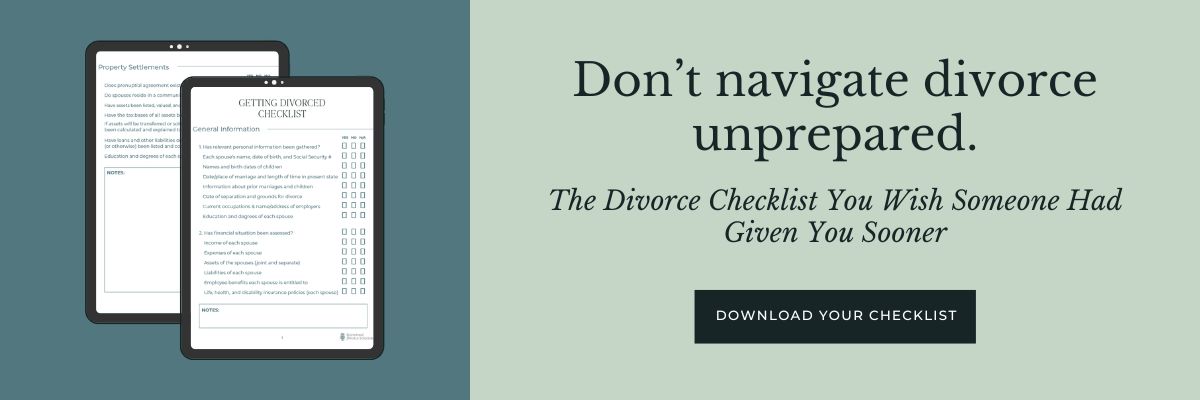
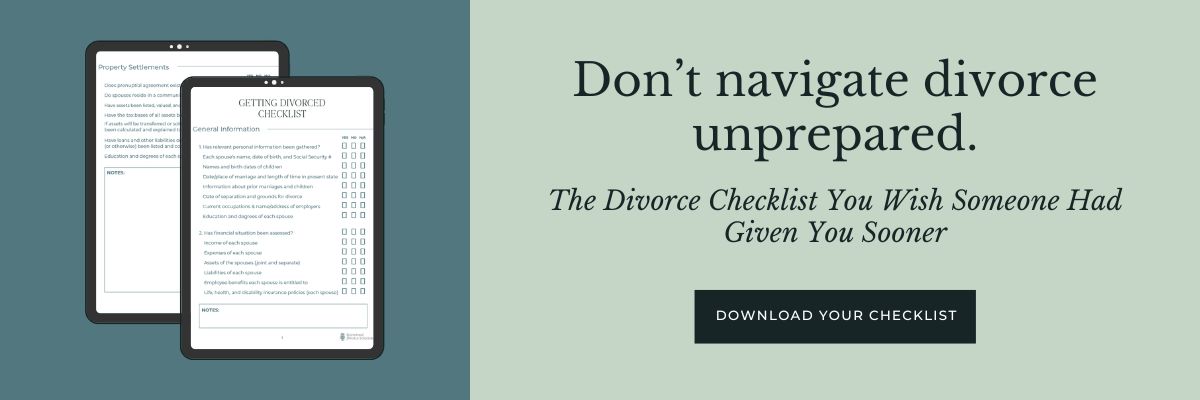
If you're seeing signs that divorce may be coming, even if you're not sure yet, now is the time to get a clear picture of where you stand financially. That means knowing what you own, what you owe, what your income looks like, and what a post-divorce budget would actually require.
You don't need to have made any decisions to start gathering that information. Knowledge isn't commitment. It's just clarity. And clarity is always worth having.
When to Call a Divorce Financial Analyst
A Certified Divorce Financial Analyst, or CDFA, is a financial professional who specializes specifically in the financial aspects of divorce. We're different from a general financial advisor, and we're different from a divorce attorney. Our job is to help you understand the full financial picture of your marriage, model out different settlement scenarios, and make sure you're not trading short-term comfort for long-term financial harm.
Here are some specific situations where working with a CDFA makes a significant difference:
You've been out of the workforce or underemployed during the marriage. Understanding your earning potential and what you'll actually need to live on post-divorce is critical before you agree to any settlement.
There are significant assets to divide. Retirement accounts, real estate, business interests, and investments all require careful analysis. Not all assets are created equal, even when the dollar amounts look the same.
You don't have a clear picture of your household finances. If your spouse has handled most of the financial decisions, you need someone in your corner who can help you get up to speed quickly.
You want to avoid going back to court. Getting the financial analysis right the first time is far less expensive, financially and emotionally, than trying to modify a settlement later.
You don't have to be certain divorce is happening to have a conversation. Many of my clients come to me in the "I don't know yet" stage, and that's exactly the right time to start getting informed.
What to Do If You're Recognizing These Signs
Recognizing the signs of an impending divorce does not mean divorce is inevitable. Some couples identify these patterns and do the hard work to rebuild. Others realize the relationship has run its course, and that the most intentional choice they can make is to move forward with clarity and support.
Either way, you deserve to make that decision from a place of awareness, not overwhelm.
Here's what I recommend:
If you want to work on the marriage: A skilled therapist is your most important resource right now. Individual therapy, couples therapy, or both can help you get clear on what's actually happening and what's worth fighting for.
If you're considering divorce: Start gathering information before you're in crisis mode. Understand what your financial picture looks like. Know your options. The financial decisions made during divorce have long-term consequences, and working with a CDFA means you don't have to figure that out alone.
If you're not sure: That's okay. Most people aren't sure for a long time. Be honest with yourself about what you're experiencing and reach out for support. You don't have to have this figured out to ask for help.
Free: The Divorce Readiness Scorecard
You do not have to decide anything to find out where you stand. This free scorecard is 20 questions across clarity, confidence, calmness, conflict management, and cash, and it gives you a separate score in each. If divorce does come, you will already know which area is weakest and what that gap tends to cost. If it does not, you have lost ten minutes. Nobody sees your answers but you.
And if you're already on the other side of a relationship ending, be patient with yourself.
Related reading: Dealing With a Breakup: 4 Simple Ways to Be Kind to Yourself
Frequently Asked Questions About Signs of an Impending Divorce
How do you know if divorce is inevitable?
There's no single answer, but in my experience, the clearest indicator is when both partners have stopped investing in the relationship. Not just arguing less, but genuinely disengaging. When neither person is reaching toward the other anymore, when repair attempts consistently fail, and when the thought of staying feels worse than the thought of leaving, divorce often becomes the most honest path forward.
What are the first signs your marriage is in trouble?
Usually it starts with communication. Conversations get shorter or more guarded. You stop sharing the small things. Humor disappears. You begin to feel more like co-managers of a household than partners in a life. These early signs are easy to rationalize, which is exactly why they're worth paying attention to before they compound.
Can a marriage be saved after these signs appear?
Yes, in many cases. Recognition is the first requirement, and many couples never get there. If both partners are willing to be honest about what's happening and committed to doing something about it, therapy and intentional effort can turn things around. What tends to make the difference is whether both people still want the marriage, not just the absence of divorce.
How long does it take to know if a marriage is over?
There's no timeline that applies to everyone. What I've observed is that most people know, on some level, before they're ready to say it out loud. The process of getting from that quiet knowing to an actual decision can take months or years. Giving yourself permission to sit with the uncertainty, while also getting the support you need, is part of the process.
What does an impending divorce look like financially?
Often the financial signs appear alongside the emotional ones. A spouse who becomes secretive about money, separate accounts being opened, changes in spending patterns, or one partner starting to move assets are all things worth paying attention to. Even without those red flags, if divorce feels like a real possibility, it's worth taking stock of your full financial picture now, including what you own jointly, what retirement assets exist, and what your expenses would look like on a single income.
Do I need a lawyer or a financial analyst first?
Both serve different purposes, and ideally you'd consult both. An attorney advises you on your legal rights and the divorce process. A CDFA helps you understand the financial implications of different settlement options so you can make informed decisions. Many people find it helpful to speak with a CDFA early, before or alongside the legal process, because the financial analysis informs the legal strategy.
You Don't Have to Navigate This Alone
At Intentional Divorce Solutions, we support individuals through every dimension of divorce. From divorce financial planning and CDFA analysis to mediation and divorce coaching, our team is here to help you make decisions that align with your values and protect your future.
Divorce Financial Planning and Analysis: In-depth financial insights and strategies for a secure future post-divorce.
Divorce Mediation: Respectful, balanced negotiations to reach mutually beneficial resolutions.
Divorce Coaching: Personalized support to help you navigate the emotional and practical challenges of divorce.
This is not a process you should navigate alone. And you don't have to.
Stay connected with news and updates!
Join our mailing list to receive the latest news and updates from our team.
Don't worry, your information will not be shared.
We hate SPAM. We will never sell your information, for any reason.
